
The Cold War Is Really Over Now

As Russia begins to spend $650 billion to modernize their armed forces (by the end of the decade), the prime minister also ordered a dramatic step to permanently cut the Russian military loose from their Cold War past. This requires scrapping over 10 million tons of obsolete weapons (including over 20,000 tanks, over 100,000 other armored vehicles and artillery, hundreds of ships and thousands of aircraft). During the 1990s, this stuff was just left to rot in open fields, remote airbases and dingy corners of ports and naval bases. In the last decade, Russia has spent over half a billion dollars providing some security, and minimal upkeep for this stuff. For a long time, there was the hope that the abandoned weapons might be useful if there was another major war. But there's no one to operate the stuff, as the current Russian armed forces are a fifth the size of the Soviet Union military that used to own all these weapons. Moreover, more than half the equipment to be scrapped is considered obsolete (by Russian standards). Nearly all of it is considered obsolete by Western standards. The rest of the world has picked over this pile of Cold War surplus for the last two decades, and bought what they thought might be useful. That made hardly a dent in the pile of abandoned weapons and equipment. READ MORE
Will the new US-Russian arms treaty blunt the nuclear threat?

On 15 January 1986, the Soviet Union's leader, Mikhail Gorbachev, introduced Kremlin plans to eliminate all of the superpower's nuclear weapons by the year 2000. The proposal was visionary, but also a bit of a propaganda ploy. One that immediately caught Ronald Reagan's attention. Later that day, when Secretary of State George Shultz went to the White House, Reagan asked him: "Why wait until the end of the century for a world without nuclear weapons?" READ MORE
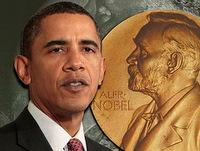
Barack Obama: Europe Found Peace Only When It Became Free
On January 1, 2010 the presidency in the Organization for Security and Co-operation in Europe will be passed in rotation to Kazakhstan. In this connection during an annual Eurasian media forum, which took place in Moscow recently, there was an opinion expressed that in the close future the emphasis in OSCE activities will shift – instead of the human rights issues the priority will be given to the security issues. It is noticing that though Kazakhstan’s leader Nazarbayev is known for his authoritative methods, his country can’t impose its policy or vision of problems on other OSCE countries, even when Russia and Belarus support Kazakhstan as their Customs Union partner. READ MORE
OSCE Meeting Discusses Russian Security Plan

Foreign ministers from Europe's main security organization met in Athens to try to work out a response to Russia's proposal for a new Euro-Atlantic security pact. READ MORE
Analyst: Russia Pushing US Out Of Europe

US President Barack Obama "does not care very much" about security in Europe, Edward Lucas, who has been The Economist's Eastern Europe correspondent for more than 20 years, told EurActiv Slovakia in an interview. READ MORE
Berlin Wall's Lessons For Today

The oxygen of a free society is accurate and trustworthy information. Yet even today, regimes around the world are intent on cutting off the supply. READ MORE
RFE/RL Interview: U.S. Vice President Joe Biden

In an exclusive interview, U.S. Vice President Joe Biden spoke with RFE/RL correspondents Brian Whitmore and Abubakar Siddique about the U.S. administration's policy on Russia, the Caucasus, Afghanistan, Pakistan, and Iran. Biden assured Central and Eastern Europeans of the United States' commitment to the region, and said that the United States will not ignore concerns about democracy in dealing with Iran on its nuclear program. READ MORE
Britain Announces Reduction In Nuclear Submarine Fleet

British Prime Minister Gordon Brown says his government is willing to cut the number of nuclear submarines to support US President Barack Obama's nuclear disarmament initiative. READ MORE

